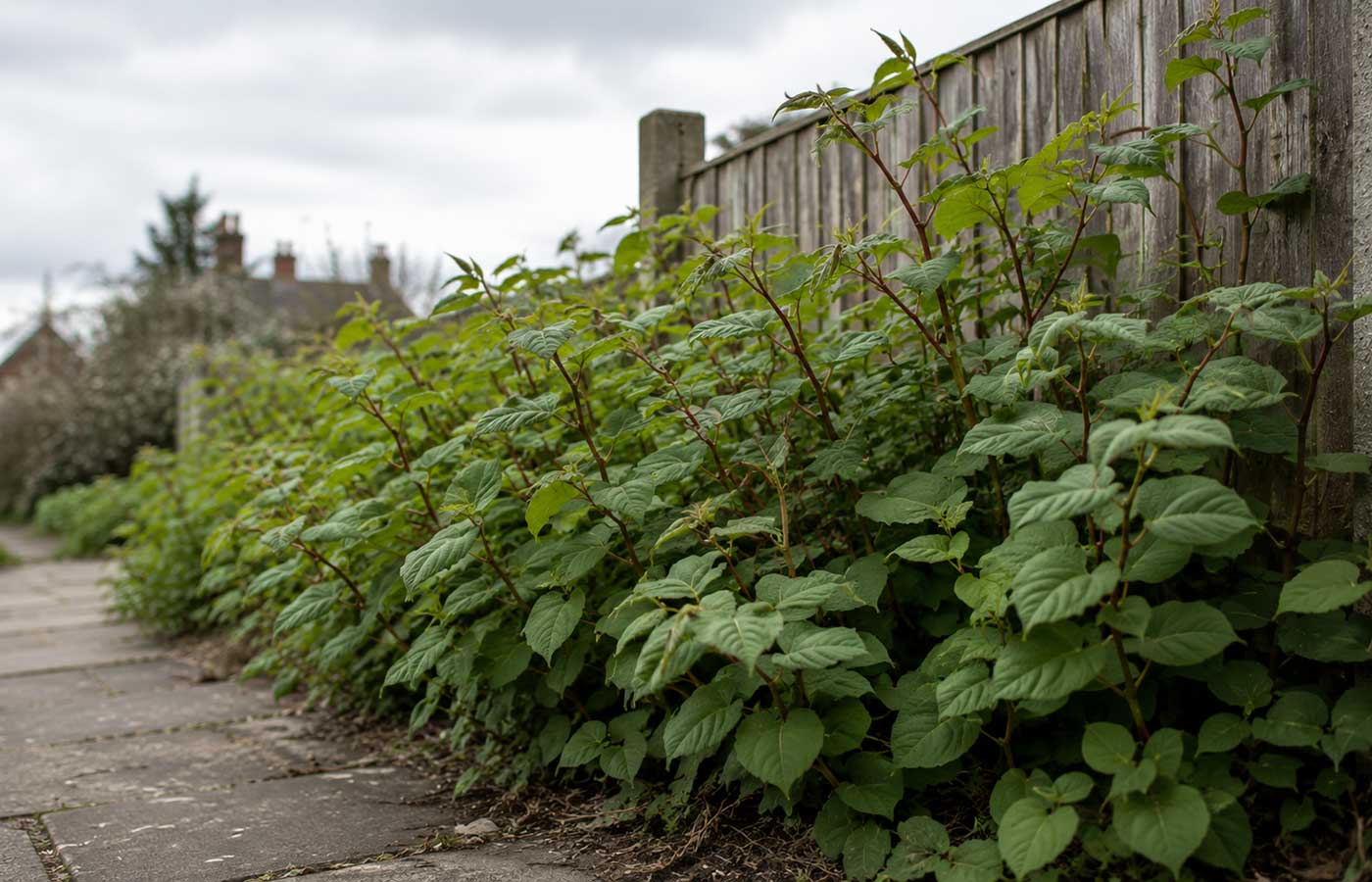
Dogwood shoots are often mistaken for knotweed
One of the most common causes of confusion during spring is the appearance of bright red dogwood shoots.
Many people searching for Japanese knotweed online eventually discover that the suspicious plant in their garden is actually dogwood growth emerging after winter.
The confusion usually happens because both plants can produce reddish stems during spring and both may grow quickly once temperatures begin rising.
Dogwood is usually a woody shrub
One major difference is the overall structure of the plant.
Dogwood is generally a woody shrub that produces branching stems year after year. Many varieties are intentionally planted in UK gardens for their colourful winter stems.
Japanese knotweed behaves differently. It produces upright seasonal canes that die back during winter before reappearing again in spring.
Although knotweed can appear shrub-like during summer, it is not a woody shrub in the same way as dogwood.
The stems often look different on closer inspection
Stem appearance usually provides useful clues.
Dogwood stems are often:
- Bright red, orange or purple
- Smooth and woody
- Branched
- Persistent during winter
Japanese knotweed stems are usually:
- Green with reddish speckling
- Hollow inside
- Bamboo-like in appearance
- Seasonal above ground
Dogwood stems tend to look more like shrub branches, while knotweed stems resemble upright canes.
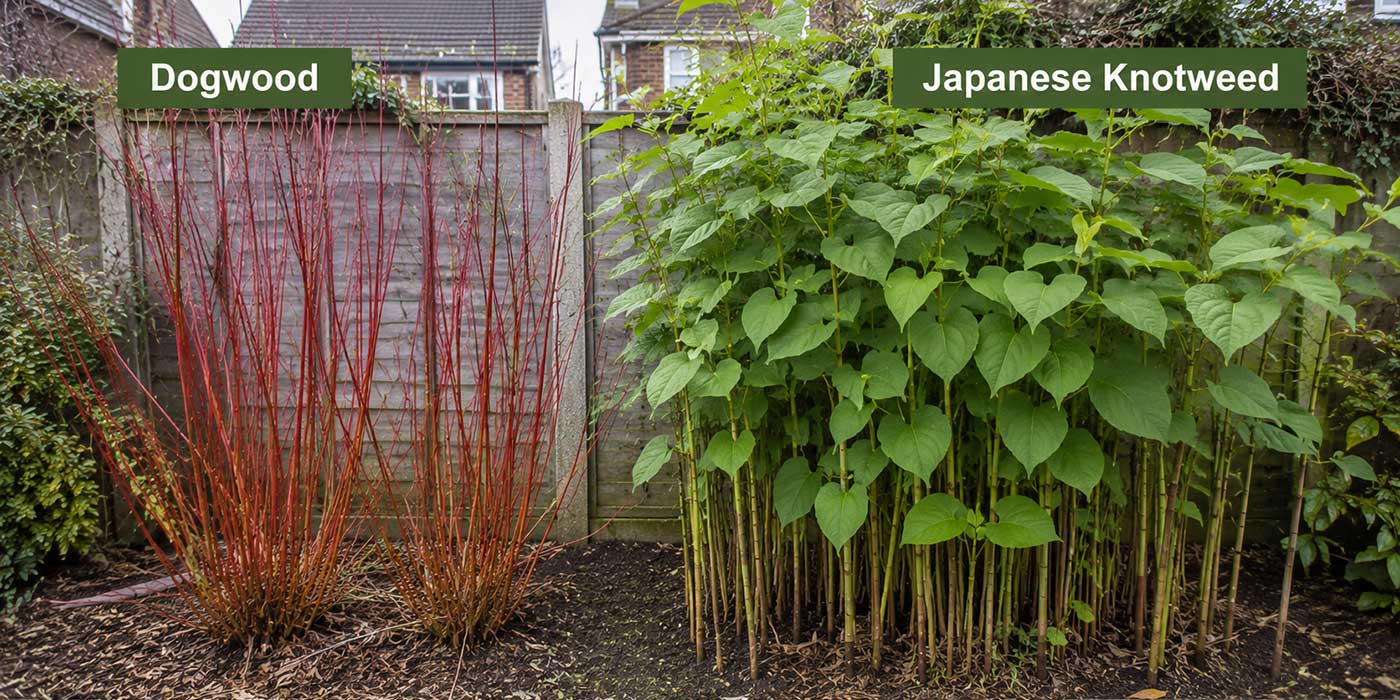
Spring growth can initially appear similar
During early spring, young dogwood shoots can sometimes resemble knotweed when viewed from a distance.
Both plants may produce reddish new growth close to the ground, particularly in damp or sheltered areas of the garden.
However, as growth develops, dogwood usually becomes more obviously branched and shrub-like.
Leaf shape is often different
Leaves normally help separate the two plants more clearly.
Japanese knotweed leaves are generally:
- Broad and flat
- Shield or heart shaped
- Large and smooth edged
- Arranged alternately along stems
Dogwood leaves are usually:
- Smaller and more oval
- Paired opposite each other
- Attached to branching stems
- More typical of ornamental shrubs
The leaf arrangement often becomes easier to recognise once the plants mature.
Dogwood usually forms a structured shrub
Dogwood commonly grows as a contained ornamental shrub with multiple woody stems emerging from a central base.
Japanese knotweed more often forms:
- Dense upright patches
- Rapid seasonal growth
- Clusters of cane-like stems
- Large areas of vegetation during summer
The overall shape of the plant is often one of the clearest differences.
Winter appearance can provide useful clues
Winter is often one of the easiest times to identify dogwood correctly.
Many dogwood varieties are deliberately grown for their colourful stems during colder months. The bright red branches remain visible throughout winter after leaves have fallen.
Japanese knotweed usually dies back during winter, leaving dry hollow brown canes rather than living colourful stems.
This seasonal difference is frequently one of the clearest indicators.
Dogwood is commonly planted intentionally
Another useful clue is the surrounding garden layout.
Dogwood is often planted:
- In ornamental borders
- Near ponds or patios
- As decorative winter planting
- In landscaped gardens
Japanese knotweed is more commonly found:
- Along boundaries
- In neglected areas
- Near disturbed ground
- Beside old structures
- Near railway land or embankments
Location alone does not confirm identification, but it can help build a clearer picture.
Photographs that help distinguish dogwood from knotweed
If you are comparing suspicious growth, it usually helps to photograph:
- The entire plant
- The stems from close range
- Leaf arrangement
- The surrounding area
- The base of the plant
- Any winter growth remaining
Whole-plant photographs usually provide much better identification clues than isolated close-up images.
Many suspicious red stems turn out to be dogwood
Dogwood is extremely common in UK gardens and regularly causes concern when bright red shoots begin appearing during spring.
In many cases, the plant eventually turns out not to be Japanese knotweed at all.
Looking carefully at whether the stems are woody and branched rather than hollow and cane-like usually provides a much clearer indication.
Related pages
Not convinced either way?
Photographs can often help distinguish knotweed from similar-looking plants.