Key point
Japanese knotweed is often mistaken for bamboo, bindweed, dogwood and several other fast-growing UK plants. Correct identification usually depends on looking at the whole plant rather than a single leaf or stem.
Growth pattern, stem shape, leaf arrangement and the surrounding location can all provide useful clues.
What Japanese knotweed usually looks like
Japanese knotweed changes appearance throughout the year, which is one reason why identification can sometimes be difficult.
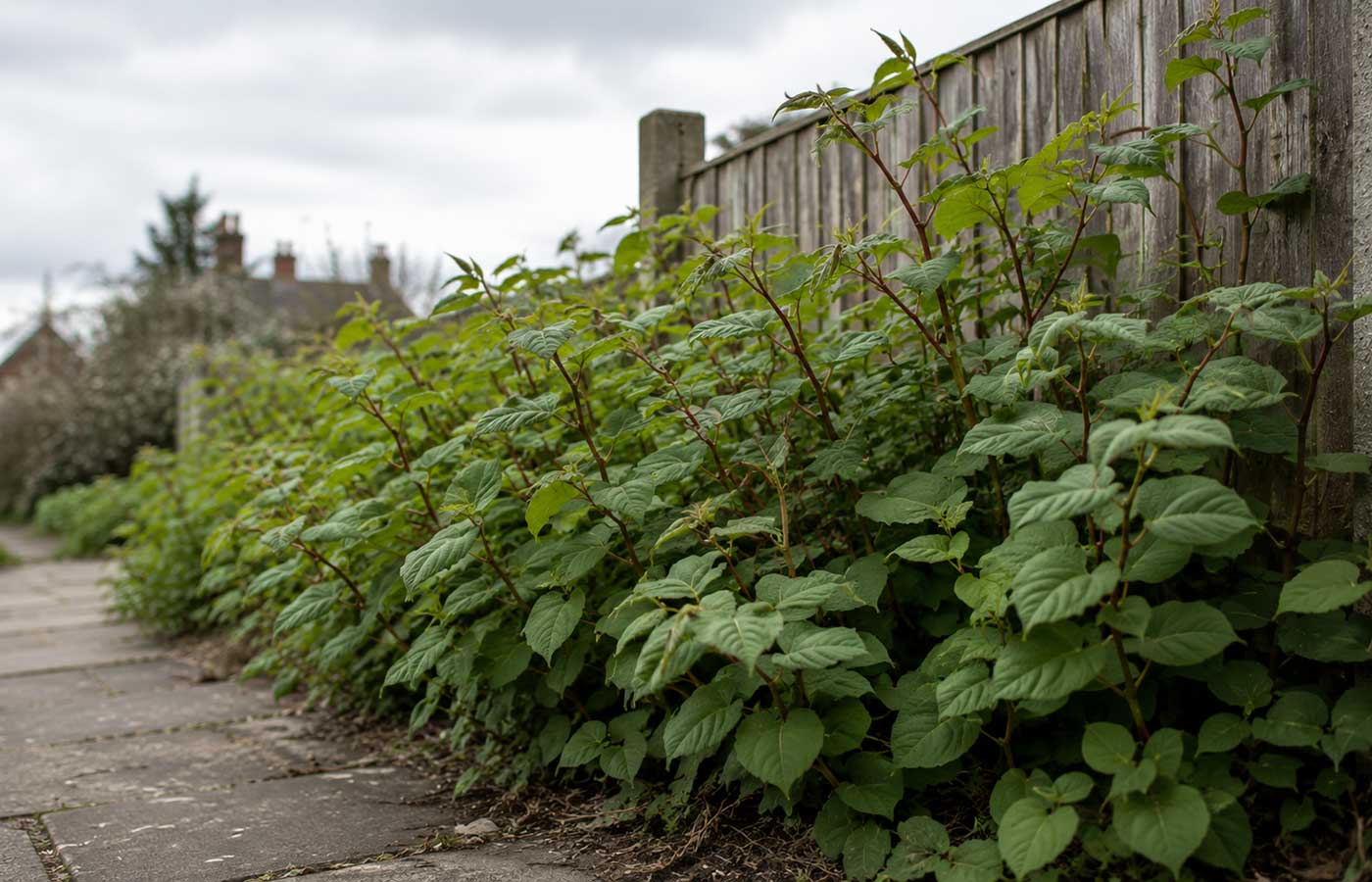
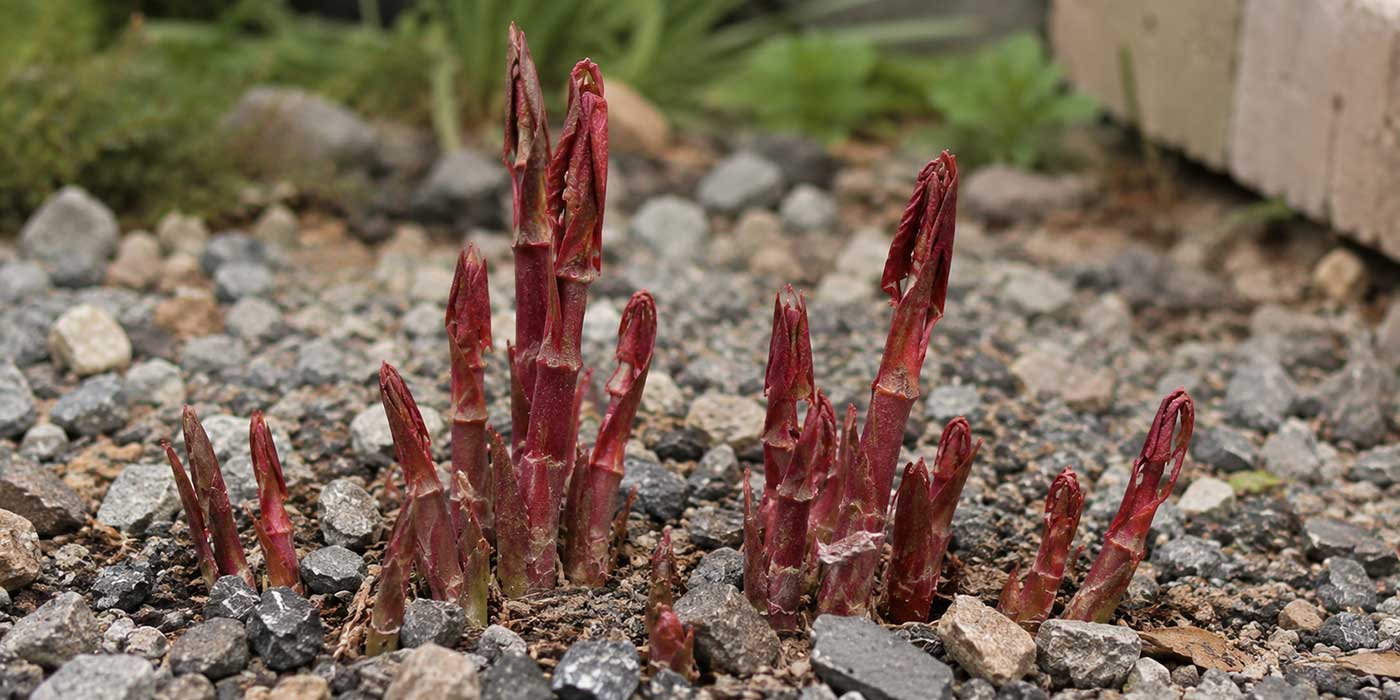
In spring, new shoots are commonly red or purple and emerge rapidly from the ground in clusters. As the season progresses, the stems become taller and more cane-like, often developing purple speckling.
Leaves are typically shield or heart shaped with a flat base and pointed tip. Mature plants can form dense stands several feet high during summer.
In autumn and winter, the foliage dies back while dry hollow stems often remain standing above ground level.
Common signs people notice first
Many property owners first become concerned after noticing one of the following:
- Fast-growing shoots appearing suddenly during spring
- Bamboo-like stems near fences, walls or paving
- Dense patches of growth returning each year
- Plants emerging close to drains, garages or outbuildings
- Unusual red shoots pushing through soil or gravel
- Tall canes with purple speckling
A single sign on its own does not always confirm knotweed. Looking at several features together usually gives a clearer picture.
Plants commonly mistaken for knotweed
Several UK plants can resemble Japanese knotweed at certain stages of growth.
Bamboo is one of the most common sources of confusion because mature knotweed stems can look similar from a distance. Bindweed, Russian vine, dogwood, lilac shoots and Himalayan balsam are also frequently mistaken for knotweed.
This is why photographs of the whole plant, including leaves, stems and the surrounding area, are often more useful than close-up images alone.
Where knotweed is often found
Japanese knotweed is commonly found:
- Along fence lines
- Near old walls and outbuildings
- Beside streams, railway land and roadsides
- In neglected gardens
- Near disturbed ground or old building work
- Behind garages and sheds
The location does not confirm identification on its own, but it can help build a clearer overall picture.
Photographs that help identification
If you are trying to identify a suspicious plant, it often helps to photograph:
- The entire plant from a distance
- Leaves from above
- Stems close-up
- The surrounding area
- Any new shoots emerging from the ground
- Nearby paving, walls or structures
Clear natural daylight photographs are usually the easiest to assess.
Not sure what you are looking at?
If you are unsure whether a plant may be Japanese knotweed, you can send a photograph for an initial check.