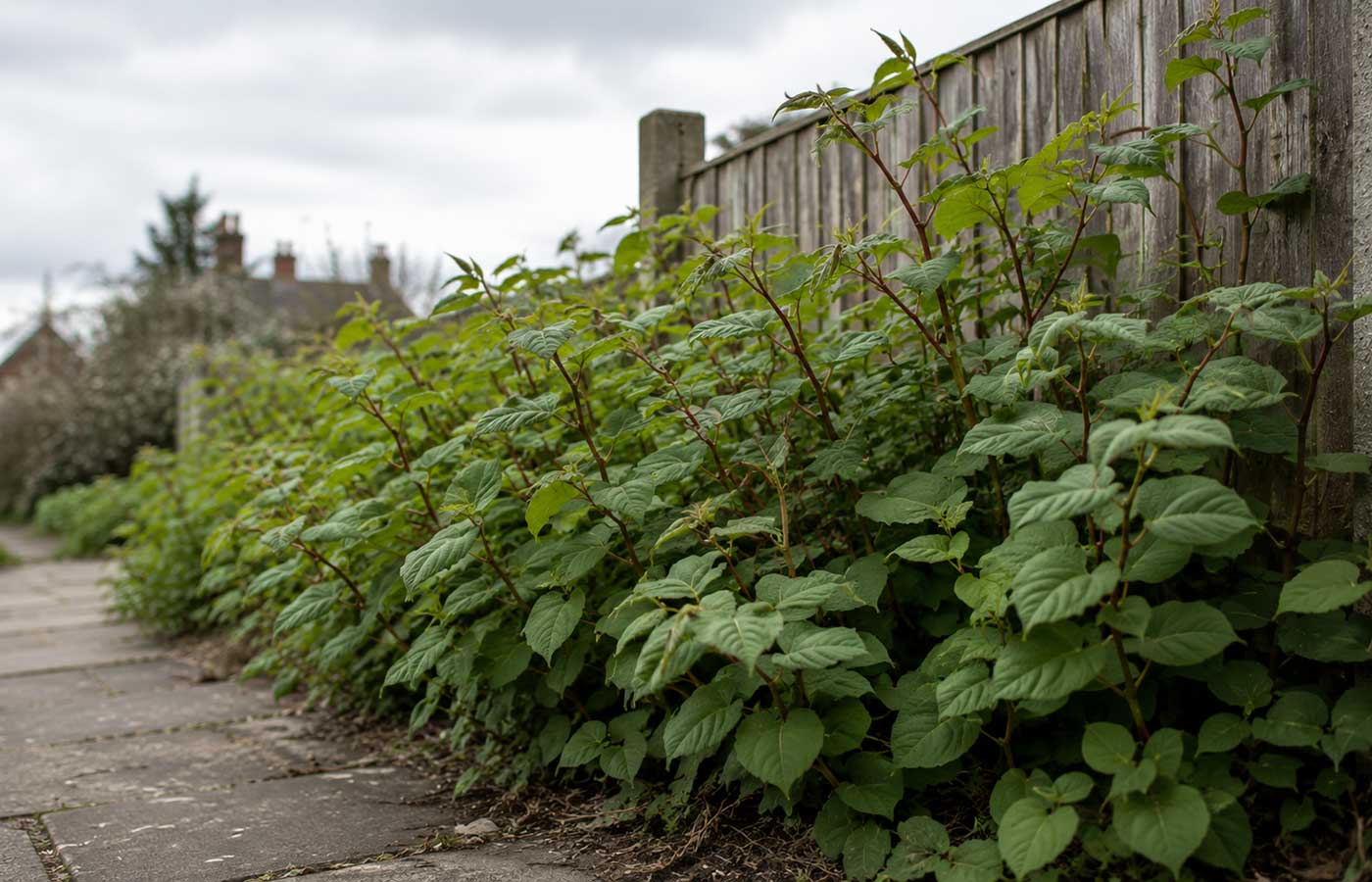
Finding knotweed close to a house often causes anxiety
Many people first become concerned about Japanese knotweed after spotting suspicious growth close to their home.
Dense stems appearing near walls, paving or garden boundaries can quickly raise questions about possible damage, property value and what should happen next.
In some cases, the plant eventually turns out not to be Japanese knotweed at all. Even so, unusual growth close to buildings is something most homeowners understandably want checked properly.
Why knotweed near buildings attracts attention
Japanese knotweed is mainly known for its extensive underground rhizome system and vigorous seasonal growth.
People often become worried when suspicious plants appear close to:
- External walls
- Foundations
- Paving and patios
- Driveways
- Drainage areas
- Retaining walls
- Garages and sheds
The concern is usually linked to the possibility of gradual spread over time rather than the visible stems alone.
The appearance of knotweed changes throughout the year
Japanese knotweed can look very different depending on the season.
During spring, reddish shoots may emerge close to structures or paving. By summer, the growth can become tall, dense and leafy.
In winter, most visible growth dies back, often leaving dry hollow canes standing above ground.
Because the plant changes so dramatically through the year, people sometimes fail to recognise it until it has already become established.
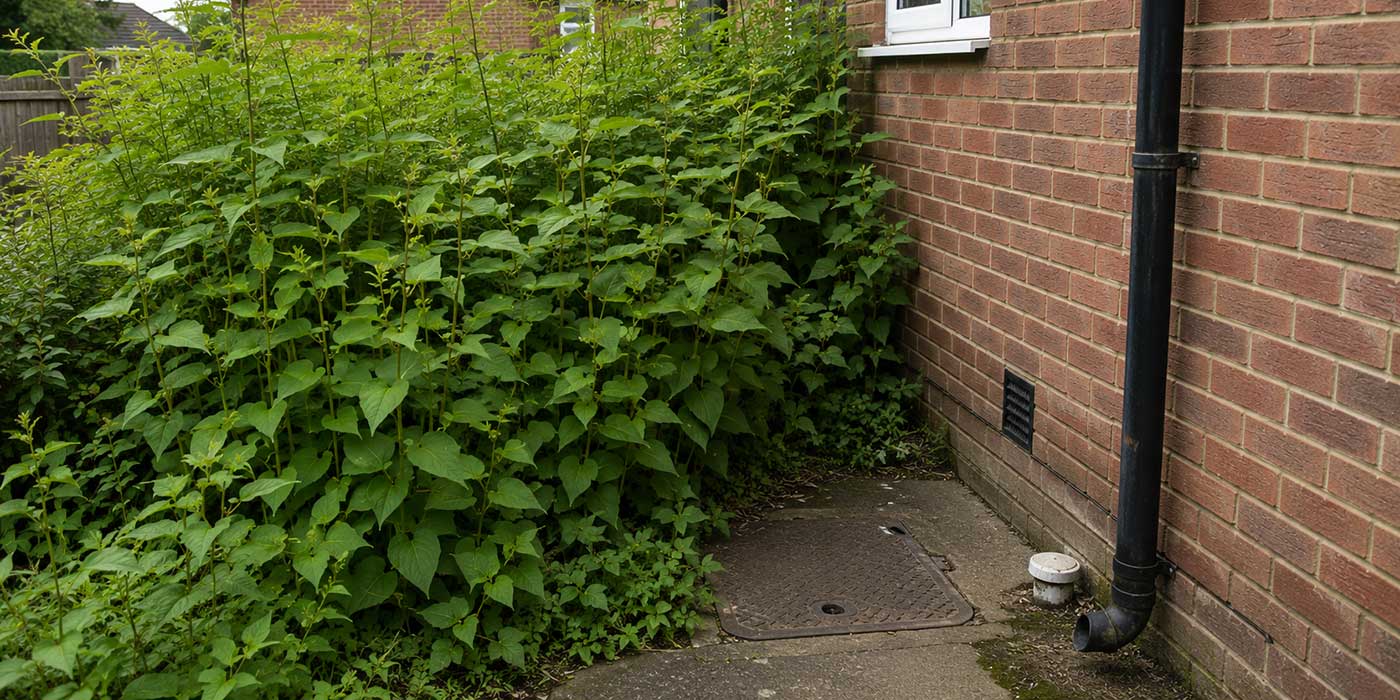
Not every fast-growing plant near a house is knotweed
Many ordinary garden plants are regularly mistaken for Japanese knotweed.
Common examples include:
- Bamboo
- Dogwood
- Bindweed
- Lilac shoots
- Russian vine
- Peonies
This is one reason why careful identification is important before assuming the worst.
Stem structure, leaf shape and growth pattern usually provide better clues than colour alone.
People often worry about structural damage
One of the biggest concerns surrounding knotweed near a house is whether it may affect structures or hard landscaping.
People commonly notice suspicious growth near:
- Cracked paving
- Garden walls
- Old drains
- Concrete paths
- Retaining structures
- Outbuildings
In many situations, cracks or movement may already have existed before the plant appeared nearby.
However, dense vegetation close to buildings naturally raises concern and usually leads homeowners to investigate further.
Knotweed can affect property sales and surveys
Many homeowners first research knotweed during a property sale or purchase.
Surveyors sometimes identify suspicious growth during inspections, particularly where vegetation appears close to structures or boundaries.
This may lead to requests for additional information or specialist identification before the transaction progresses further.
Even uncertainty over whether a plant is knotweed can sometimes delay decisions.
Boundary growth can create neighbour concerns
When suspicious plants appear near shared fences or adjoining gardens, neighbours sometimes become involved in the discussion.
People are often particularly cautious when growth appears:
- Along shared boundaries
- Beside neighbouring paving
- Near garages or extensions
- Close to retaining walls
In many situations, uncertainty over identification creates more concern than confirmed knotweed itself.
The location of the plant often influences concern
Knotweed growing at the far end of a large garden may create different concerns from growth appearing directly beside a property wall.
People are generally more cautious when suspicious growth appears:
- Very close to the house
- Beside hard surfaces
- Near underground services
- Close to extensions or conservatories
- Along narrow access areas
The surrounding environment often influences how seriously people view the situation.
What homeowners usually do first
Most people begin by trying to confirm whether the plant is actually Japanese knotweed.
Clear photographs are often taken showing:
- The full area of growth
- Leaves and stems together
- Nearby structures
- The surrounding garden
- Young shoots or flowers
- The distance from the house
Whole-plant photographs are normally much more useful than isolated close-up images.
Panic is rarely helpful
Because Japanese knotweed receives so much attention online, many people understandably assume the worst after spotting suspicious growth near their home.
However, not every unusual plant automatically represents a major property problem.
Many suspected cases eventually turn out to involve ordinary garden plants rather than knotweed itself.
Taking time to compare the plant properly usually provides a clearer and calmer starting point.
Professional advice is sometimes sought
If growth appears particularly close to buildings, boundaries or hard landscaping, some homeowners choose to seek professional identification or inspection.
This is especially common where:
- A property sale is planned
- Mortgage questions arise
- The plant appears well established
- Neighbour concerns develop
- Dense recurring growth is present
The aim is usually to understand the situation clearly before making decisions about what happens next.
Related pages
Want another view on the plant?
You can send a photograph if you are uncertain whether a plant could be knotweed.