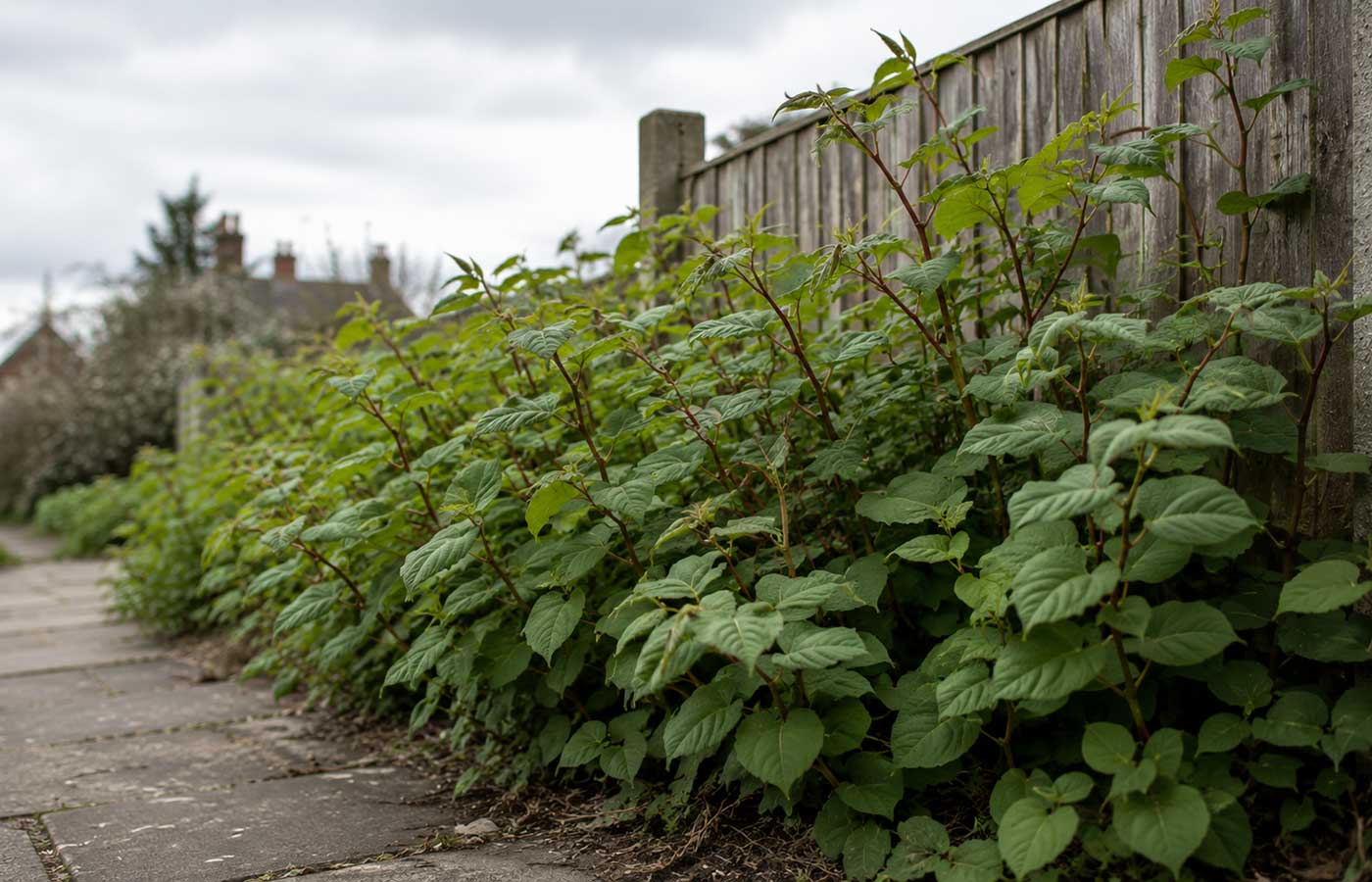
Spring is when knotweed often becomes noticeable again
For many property owners, spring is the first time Japanese knotweed becomes visible after winter.
Although much of the plant dies back during colder months, the underground rhizome system remains alive beneath the surface. Once temperatures begin rising, fresh shoots can emerge surprisingly quickly.
This sudden appearance is one reason why many people first become concerned about knotweed during March, April and May.
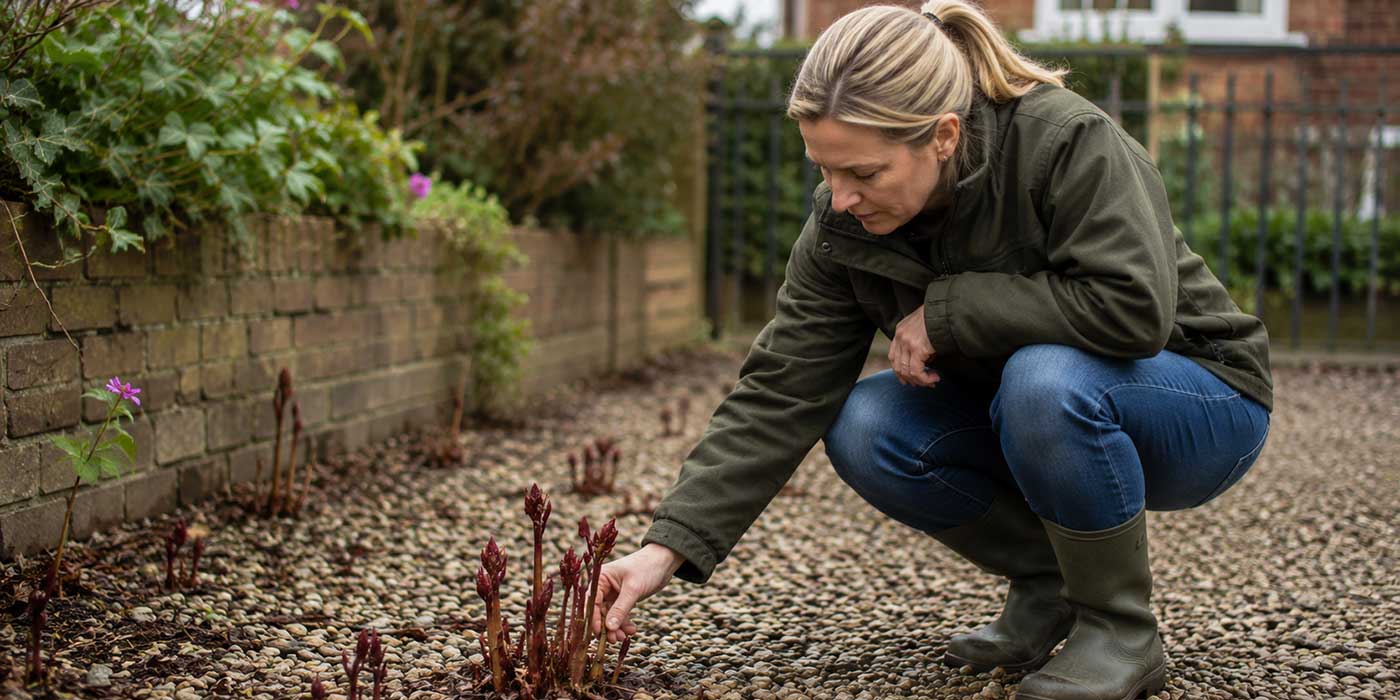
Young spring shoots are usually reddish or purple
One of the most recognisable features of spring knotweed growth is the colour of the new shoots.
Fresh shoots commonly appear:
- Reddish or purple
- Thick and upright
- Clustered together
- Smooth in texture
- Fast growing
Some people compare early knotweed shoots to asparagus tips or small bamboo stems emerging through the ground.
As the plant matures during spring, the colour often changes gradually towards green.
Growth can appear surprisingly quickly
Japanese knotweed is known for rapid seasonal growth.
Shoots that first appear small during early spring may become noticeably taller within a relatively short period, especially during mild wet weather.
In established infestations, multiple shoots often emerge together across the same area of ground, creating dense patches of vegetation.
This rapid growth pattern is one reason knotweed often stands out compared with surrounding plants.
Spring growth is often noticed near hard surfaces
Many people first spot knotweed because shoots begin appearing close to visible structures.
Common locations include:
- Beside paving slabs
- Along garden paths
- Near retaining walls
- Close to drains
- Behind garages and sheds
- Along boundary fencing
Spring growth emerging through gravel or cracks in hard surfaces often causes particular concern for property owners.
The leaves begin unfolding during spring
As the stems grow taller, leaves gradually begin unfolding from the canes.
Young leaves are usually:
- Bright green
- Soft in texture
- Shield or heart shaped
- Arranged in a zig-zag pattern along stems
The appearance can still vary considerably during spring depending on weather conditions and the age of the growth.
Several plants are commonly mistaken for spring knotweed
Spring is also the time when many harmless plants are mistaken for Japanese knotweed.
Common examples include:
- Lilac shoots
- Peony shoots
- Bindweed
- Dogwood shoots
- Bamboo growth
- Himalayan balsam
Because several plants produce reddish shoots during spring, photographs showing the whole plant are usually more reliable than close-up images alone.
Established spring growth often forms clusters
Japanese knotweed rarely appears as a single isolated stem.
More commonly, spring growth emerges in groups from the same general area. Over time, these shoots may become dense enough to form thick vegetation patches later in the season.
This clustered growth pattern is one of the characteristics people often notice when comparing suspicious plants with knotweed photographs online.
Weather can affect how knotweed appears
Spring appearance can vary depending on temperature, rainfall and sunlight.
During colder springs, growth may remain low to the ground for longer. Warm wet conditions often encourage much faster development.
Plants photographed during early March may therefore look very different from the same growth viewed during late May.
Photographs that help identify spring knotweed
If you are trying to identify possible spring knotweed growth, it usually helps to photograph:
- New shoots emerging from the ground
- The surrounding area
- Leaves beginning to unfold
- The overall pattern of growth
- Nearby structures or paving
- Multiple angles of the plant
Natural daylight images generally provide the clearest results.
Spring is often when people first begin researching knotweed
Because new shoots emerge so visibly during spring, this is the period when many homeowners, buyers and tenants first begin searching online for knotweed information.
In many cases, the plant turns out not to be Japanese knotweed at all. However, comparing growth patterns, stems, leaves and location together can usually provide a clearer indication than relying on one feature alone.
Related pages
Need a second opinion?
If a plant looks suspicious, a photograph may help narrow down whether it could be Japanese knotweed.