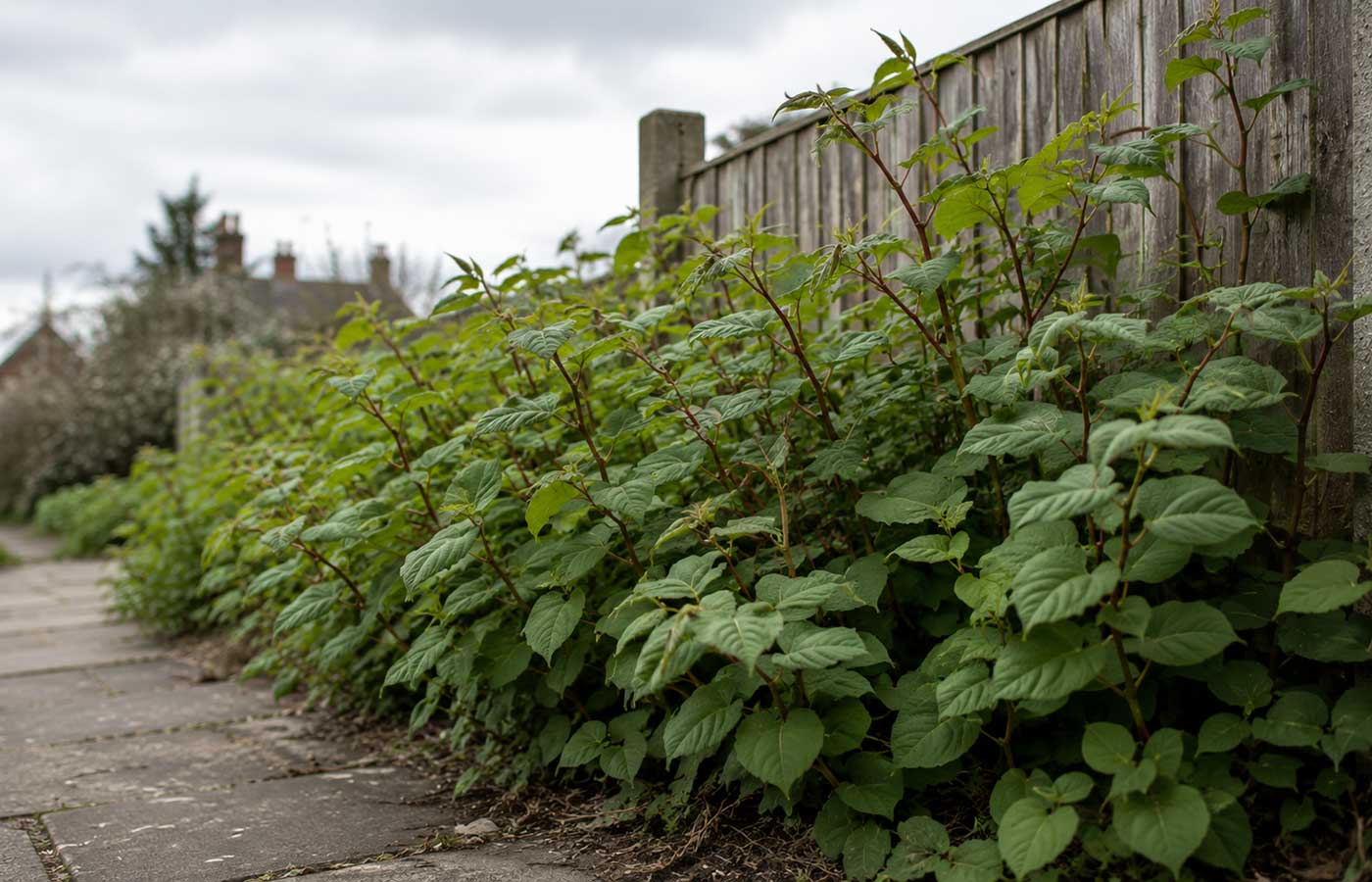
Finding suspicious growth can feel worrying
Many people first suspect Japanese knotweed after noticing unusual shoots, dense vegetation or bamboo-like stems appearing in the garden.
The discovery often creates immediate concern, particularly when the growth appears near walls, paving, drains or boundaries.
However, many suspicious plants eventually turn out not to be Japanese knotweed at all, which is why careful identification is usually the first step.
Avoid rushing to conclusions immediately
Because Japanese knotweed receives so much publicity online, many ordinary garden plants are quickly mistaken for it.
Common lookalike plants include:
- Bamboo
- Dogwood
- Bindweed
- Lilac shoots
- Peonies
- Himalayan balsam
Looking carefully at the leaves, stems and overall growth pattern usually provides more reliable clues than focusing on one feature alone.
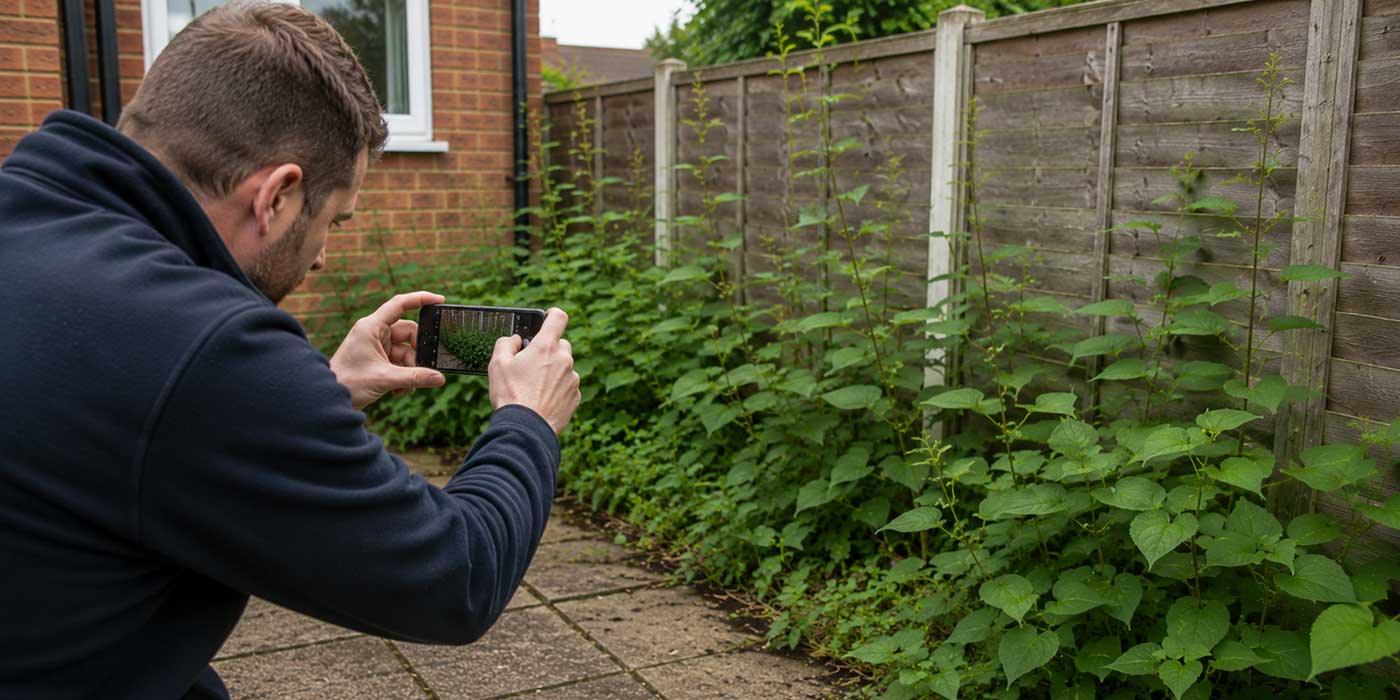
Take clear photographs of the plant
One of the most useful first steps is taking good quality photographs in natural daylight.
Helpful photographs often include:
- The full area of growth
- Close-ups of leaves and stems
- The surrounding garden
- Nearby paving or structures
- Young shoots or flowers
- The distance from buildings
Wide photographs showing the overall setting are usually much more useful than extreme close-ups alone.
Try to identify the season of growth
Japanese knotweed changes appearance dramatically throughout the year.
Spring growth often appears as reddish shoots emerging from the ground.
Summer usually brings dense green leafy stems, while winter often leaves dry hollow canes behind after the plant dies back.
Understanding the time of year can help make photographs easier to compare with reliable identification examples.
Avoid cutting or disturbing the plant unnecessarily
Once people suspect knotweed, they sometimes begin cutting, digging or pulling at the growth immediately.
Many homeowners instead choose to leave the plant undisturbed until they understand more clearly what they are dealing with.
This is especially common where the growth appears close to:
- Boundaries
- Structures
- Drains
- Paving or hard landscaping
- Neighbouring gardens
Check whether the plant returns repeatedly
One feature that often raises concern is repeated seasonal growth from the same area year after year.
Japanese knotweed commonly reappears from established underground rhizomes once temperatures begin rising during spring.
Dense clusters emerging from the same location repeatedly may attract closer attention from homeowners and surveyors.
Pay attention to nearby structures and surfaces
People often become particularly cautious when suspicious growth appears close to:
- House walls
- Concrete paths
- Retaining walls
- Driveways
- Drain covers
- Garden buildings
The location of the growth is often one of the reasons people begin investigating further.
Property sales and mortgages may increase concern
Some homeowners only begin researching knotweed after preparing to sell or remortgage their property.
Surveyors sometimes identify suspicious vegetation during inspections, particularly where fast-growing plants appear close to structures or boundaries.
This can lead to requests for further identification or specialist advice before the property transaction continues.
Neighbours sometimes notice the growth too
If suspicious vegetation appears near a shared boundary, neighbouring properties sometimes become involved in the discussion.
This is particularly common where the plant appears:
- Along fences
- Beside garages
- Near shared driveways
- Close to adjoining gardens
In many situations, uncertainty over the plant’s identity is what creates concern initially.
Many suspected plants turn out not to be knotweed
A large number of suspicious plants eventually prove to be ordinary garden species rather than Japanese knotweed.
Fast-growing vegetation, red shoots and bamboo-like stems naturally attract attention, especially after reading online articles or seeing photographs.
Taking time to compare several features carefully usually provides a much clearer picture than relying on colour or stem shape alone.
People sometimes seek professional identification
Where growth appears particularly dense or close to buildings, some homeowners choose to seek professional identification or inspection.
This is especially common where:
- A property sale is planned
- Mortgage concerns arise
- The plant appears well established
- Growth returns repeatedly
- Neighbour concerns develop
The aim is usually to understand the situation properly before deciding what happens next.
Related pages
Still comparing different plants?
Photographs can often help separate knotweed from bamboo and similar species.