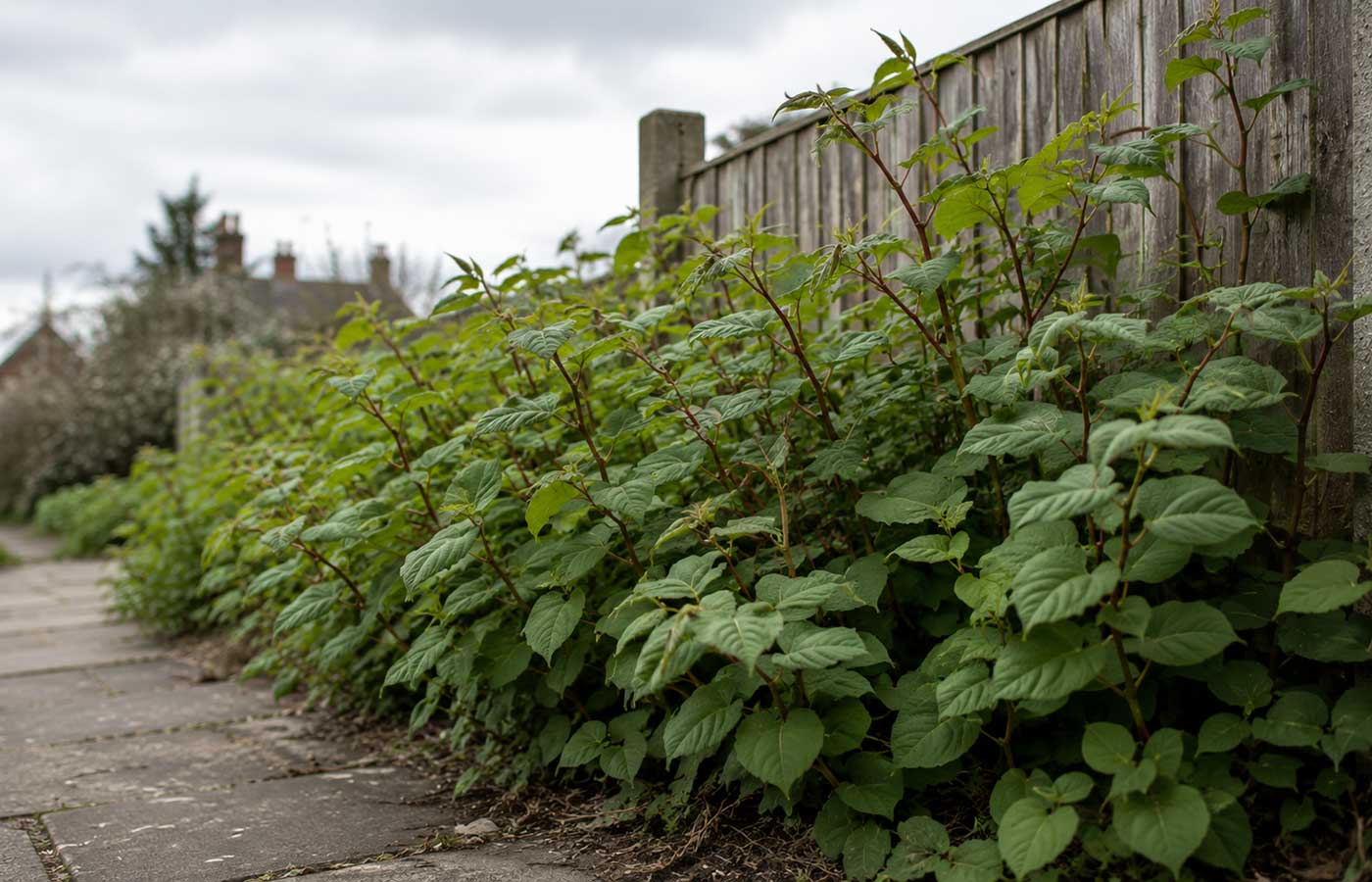
What makes people suspect knotweed?
Most people do not begin by identifying Japanese knotweed confidently. Instead, they notice something unusual.
The plant may appear suddenly during spring, grow faster than surrounding plants, or start spreading near paving, fences or outbuildings. In many cases, people first become suspicious after hearing about knotweed in the news or seeing photographs online.
The difficulty is that several ordinary UK plants can produce similar-looking shoots or stems at certain times of year.
The growth often looks aggressive
One reason Japanese knotweed attracts attention is the speed and density of its growth.
New shoots commonly emerge in clusters and can become tall within a relatively short period. Established plants may create thick patches that return year after year from the same area.
People often describe the stems as bamboo-like, particularly once the plant matures during late spring and summer.
Leaves alone do not always give a clear answer
A common mistake is trying to identify knotweed from a single leaf.
Although Japanese knotweed leaves have a recognisable shape, several other UK plants can appear surprisingly similar when viewed close-up. Looking at the stems, overall growth pattern and surrounding location is usually more reliable.
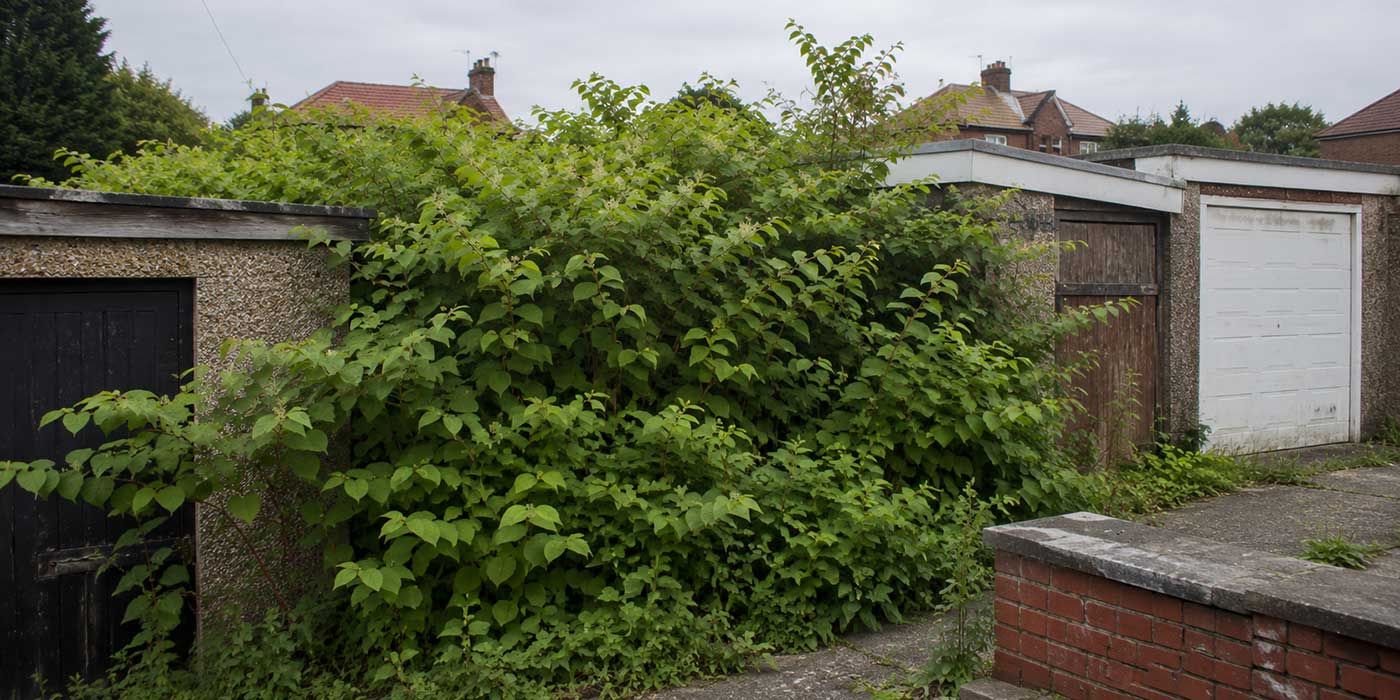
For example, knotweed often forms dense upright growth rather than isolated stems scattered randomly around a garden.
Location can sometimes provide clues
Japanese knotweed is frequently found in places where ground has previously been disturbed.
It may appear:
- Along old fence lines
- Beside garages and sheds
- Near old building work
- Behind retaining walls
- Close to streams or railway land
- In neglected corners of gardens
The location alone does not confirm anything, but it can help build a broader picture when combined with the appearance of the plant itself.
Several common plants are mistaken for knotweed
Many photographs sent for identification turn out not to be Japanese knotweed at all.
Bamboo is one of the most common sources of confusion because mature knotweed stems can look similar from a distance. Bindweed, Russian vine, dogwood shoots and Himalayan balsam are also regularly mistaken for knotweed.
This is why photographs showing the whole plant are usually more useful than tightly cropped close-ups.
Seasonal changes can make identification difficult
Japanese knotweed does not look the same throughout the year.
Spring growth often appears reddish or purple. During summer the plant becomes much taller with broad green leaves and dense growth. By winter, much of the foliage dies back, leaving dry hollow canes standing above ground.
A plant photographed during winter can look completely different from the same plant during June or July.
Photographs that usually help most
If you are trying to work out whether a plant may be knotweed, it often helps to photograph:
- The whole plant from several angles
- The surrounding area
- Leaves and stems together
- Any shoots emerging from the ground
- Nearby paving or structures
- The overall size of the growth
Natural daylight photographs are normally easiest to assess.
Related pages
Not sure what you are looking at?
If you are unsure whether a plant may be Japanese knotweed, you can send a photograph for an initial check.